
Every Sacramento homeowner with a wood fence asks us the same question sooner or later: Can this be fixed, or is it time for a new fence? The honest answer depends on one thing more than any other — the condition of the posts. Pickets and rails are the skin of a fence. The posts are its bones. This guide walks you through the same checks we make on an estimate visit, so you can tell whether a fence repair is money well spent or money thrown at a fence that’s already finished.
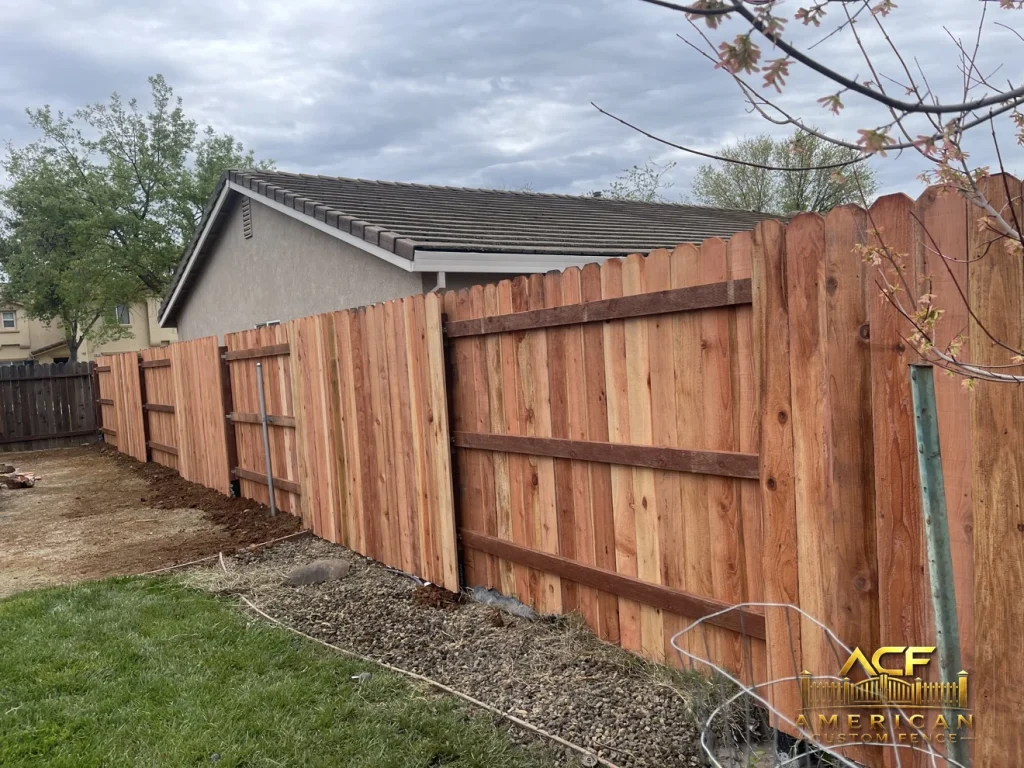
Start With the Posts — Everything Hangs on Them
Walk the fence line and push each post firmly at the top. A sound post barely moves. A post that sways, feels spongy at the base, or has soil pulling away around it is telling you the real story of the fence.
Most post failure happens right at the ground line, and there’s a simple reason. The USDA Forest Products Laboratory’s Wood Handbook explains that decay fungi need sustained moisture to grow — wood kept dry doesn’t rot. The few inches where a post enters the soil stay damp the longest after every rain and every sprinkler cycle, while also getting the air fungi need. That’s why a post can look perfectly fine two feet up and be soft as cork at the base.
Test it yourself: press a flat screwdriver into the post right at the soil line. Sound wood resists. Decayed wood lets the blade sink in. The Wood Handbook also warns that decay can reduce a board’s strength well before the damage is obvious — so a post that “still looks okay” may already be weak.
One or two bad posts with solid neighbors? That’s a repair. Rot or looseness at most posts along a run? That’s a fence at the end of its life.
Then Check Rails, Pickets, and the Gate
Rails fail where they meet the posts. Look for rails that sag, pull away, or split around old nails — nails work loose as wood swells and shrinks through Sacramento’s hot summers and wet winters, and a rail hanging on by its fasteners is a panel waiting to drop.
Pickets are the easiest call. Warped, split, or missing pickets on an otherwise solid fence are a straightforward fix — pickets are replaceable wear parts, not structural ones. And if your gate sags or drags, check the gate post first: gates concentrate weight and movement on one post, so a gate problem is often a post problem in disguise.
When a Fence Repair Honestly Makes Sense
A section repair is the right call when the damage is local:
- Storm or wind damage to one section — a tree limb or one hard gust took out a panel, but the posts on either side are sound.
- One or two rotted posts in an otherwise solid fence.
- Pickets and rails only — the structure is strong; the surface is tired.
- A leaning section whose posts test solid — sometimes a post was set shallow or the soil shifted, and the wood itself is still good.
In these cases, an honest contractor replaces what’s failed, matches the existing style, and leaves the rest of your fence — and your budget — alone.
When Replacement Is the Smarter Money
Replacement wins when the failure is systemic:
- Most posts along the run are soft, loose, or leaning. Replacing posts one by one, year after year, costs more in repeated labor than building the fence right once.
- The lean repeats after every storm. That’s not bad luck — it’s shallow posts, no concrete, or posts rotted through. The design failed, not just the wood.
- Rails are splitting at multiple posts. The frame is going, not just a board or two.
- You keep “fixing” the same fence. Add up the last few repairs honestly. Patching a failing fence is the most expensive way to own one.
There’s no shame in a fence wearing out — especially one that was built fast and cheap, with posts dropped in dirt and boards nailed up. It was never given a chance to last.
The Benchmark: How a Fence Should Have Been Built
The fairest way to judge your old fence is against how a fence is built when it’s meant to last. Here’s our standard on every job:
- Posts set 2 to 3 feet deep in concrete — not dropped in a dirt hole that turns to soup every winter.
- Waterproof wrap below ground on every post, sealing the ground-line zone where rot starts.
- Pressure-treated posts and rails, rated for ground contact — the AWPA use-category system exists precisely because wood touching soil needs the right treatment level.
- Redwood pickets — redwood heartwood is naturally decay-resistant.
- Simpson connectors and screws, never nails — screws hold as wood moves with the seasons; nails back out.
Judge your fence against that list. If it was built with shallow, unwrapped posts and nails, its problems aren’t a mystery — and repairing it section by section won’t change the design that caused them.
Quick Decision Checklist
- Push every post. Most solid → repair is on the table. Most loose or soft → replacement.
- Probe the ground line with a screwdriver. One or two bad posts → repair. A pattern → replacement.
- Count your repairs in the last few years. If the list is growing, stop feeding the fence.
Frequently Asked Questions
Can a single leaning post be fixed without rebuilding the section?
Often, yes — if the post itself is sound but was set too shallow or the soil shifted, it can be reset or braced properly. If the post is rotted at the ground line, it needs to come out; a rotted post can’t be un-rotted.
Does my whole fence need replacing if one section blew down in a storm?
Usually not. If the posts beside the damaged section test solid, rebuilding that one section to match is an honest repair. Storm damage to one panel doesn’t condemn a healthy fence.
Why did my posts rot when the pickets still look good?
Because the pickets live in the air, where they dry out after rain — and dry wood doesn’t decay. The posts sit at the soil line, where moisture lingers. That’s exactly why posts need ground-contact treatment and a waterproof wrap below ground.
How do I know a contractor’s fence repair quote is honest?
Ask them to show you the post test. An honest assessment starts at the posts — anyone quoting a full replacement without checking the ground line, or pushing repairs on posts that are soft all along the run, is selling, not advising.
Not Sure Which Way Your Fence Leans?
We’ll walk the fence line with you, test the posts, and tell you plainly whether a fence repair will hold or replacement is the smarter money — even if the answer is “a small repair, and we’re not the ones who need to do it.” Estimates are free.
Call American Custom Fence at (916) 579-3063 for a free estimate. Licensed, Bonded & Insured — CSLB License #1105341. Serving Sacramento and surrounding areas.