
Almost every fence we replace in the Sacramento area stands on a property line — which means it belongs, in a practical sense, to two households at once — the exact situation the Good Neighbor Fence Act covers. Sooner or later a homeowner asks us the awkward question: “My neighbor and I share this fence. Who is supposed to pay for replacing it?”
California actually has a law written for exactly that conversation. It’s called the Good Neighbor Fence Act of 2013, and it lives in California Civil Code §841. This article walks through what the law says, in plain language, so you can have that conversation with your neighbor informed — and keep it friendly. This is general information about the law, not legal advice; for a dispute about your specific fence, talk to a California real estate attorney.
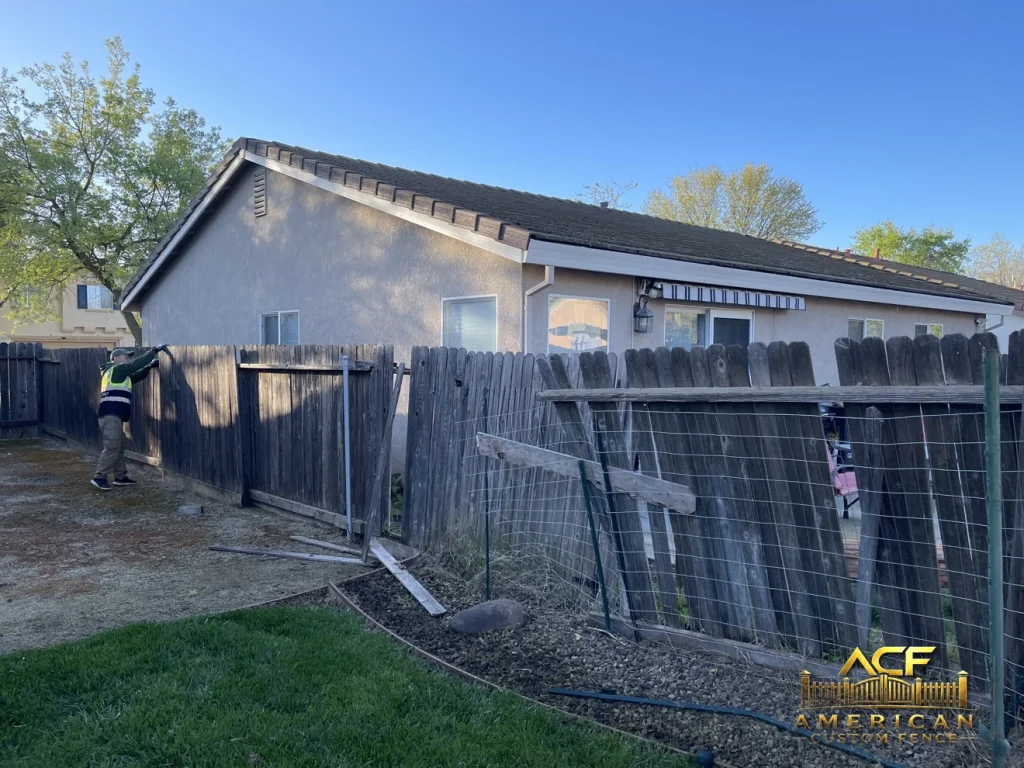
The Basic Rule of the Good Neighbor Fence Act: Neighbors Are Presumed to Split It Equally
Section 841 starts from a simple idea. Adjoining landowners “shall share equally in the responsibility for maintaining the boundaries and monuments between them” (§841(a)).
For fences specifically, the law creates a presumption: adjoining landowners “are presumed to share an equal benefit from any fence dividing their properties” and are therefore “presumed to be equally responsible for the reasonable costs of construction, maintenance, or necessary replacement of the fence” (§841(b)(1)).
Two words in that sentence matter:
- “Presumed.” Equal sharing is the starting point, not an absolute. The law itself provides ways the presumption can change (more on that below), and neighbors can always agree to something different — the statute says “unless otherwise agreed to by the parties in a written agreement.”
- “Reasonable.” The shared responsibility covers the reasonable costs of building, maintaining, or necessarily replacing the fence — a sound, standard fence. It is not a blank check for one neighbor’s upgrades.
The law also defines its terms: a “landowner” is a private person or entity holding a possessory interest in the property — the definition expressly does not include a city, county, district, or other public body — and “adjoining” simply means the properties are contiguous, touching each other (§841(c)).
Before You Spend Anything: The 30-Day Written Notice
This is the part most homeowners miss, and it’s the part that protects everyone. If you plan to incur costs for a shared fence, §841(b)(2) requires you to give 30 days’ prior written notice to each affected adjoining landowner before the work.
The notice isn’t just a courtesy note — the statute lists what it must include:
- Notification of the presumption of equal responsibility for the reasonable costs of construction, maintenance, or necessary replacement of the fence.
- A description of the nature of the problem facing the shared fence — leaning posts, ground-line rot, storm damage, whatever is actually wrong.
- The proposed solution for addressing the problem.
- The estimated costs involved.
- The proposed cost-sharing approach.
- The proposed timeline for getting the problem addressed.
In practice, this is exactly the shape of a good estimate visit: we walk the fence line with you, document what’s failing and why, and put a written proposal together. That documentation gives you what you need for a proper notice — a real description of the problem, a real proposed solution, and real numbers — instead of a vague “the fence looks bad, let’s split it.” (Consistent with how we work everywhere: no prices are published on this website, and your estimate is prepared for your specific fence.)
Do not skip the notice and build first. The 30-day written notice is written into the law as the step that comes before incurring costs. A neighbor handed a finished bill for a fence they never heard about has every reason to push back — and the conversation will be much harder than it needed to be.
When Equal Sharing Isn’t Automatic: The “Unjust” Exceptions
The presumption of a 50/50 split can be overcome. Under §841(b)(3), a landowner can rebut it “by a preponderance of the evidence” showing that equal responsibility would be unjust. The statute tells the court to consider all of the following:
- (A) Disproportionate benefit — whether the financial burden on one landowner is substantially disproportionate to the benefit that landowner actually gets from the fence.
- (B) Cost vs. value — whether the cost of the fence would exceed the difference in the value of the property before and after installation.
- (C) Undue financial hardship — whether the burden would impose an undue hardship given that party’s financial circumstances, shown by reasonable proof.
- (D) Reasonableness of the project — including whether the costs appear unnecessary or excessive, and whether they result from one landowner’s personal aesthetic, architectural, or other preferences.
- (E) Any other equitable factors appropriate under the circumstances.
If the presumption is successfully rebutted, the court may order a contribution of less than an equal share — or no contribution at all (§841(b)(4)).
Factor (D) is the one worth remembering when you’re planning. If you want a taller, fancier, or more decorative fence than the standard fence the property line needs, the law treats the extra cost driven by your personal preferences as your cost. The shared obligation is the reasonable, standard fence. Upgrades beyond that are a conversation, not an entitlement — many neighbors happily split a nicer fence, but they agree to it in writing first.
A Practical, Friendly Way to Handle a Shared Fence
The law sets the floor. Good neighbors usually do better than the floor. Here’s the sequence we see work, week after week, across Sacramento, Fair Oaks, Carmichael, Roseville, Folsom, and El Dorado Hills:
- Talk first, informally. Mention the fence over the property line before any paperwork appears. A heads-up costs nothing and changes the tone of everything after.
- Walk the fence together. Look at the posts at the ground line, the lean, the broken rails. When both owners see the same rot, the “whether” argument mostly disappears. (Not sure what you’re looking at? Our guide Fence Repair or Full Replacement? How to Tell walks through the same checks we make.)
- Get a written estimate. A real proposal names the problem, the solution, and the cost — which is most of your §841 notice already drafted.
- Send the 30-day written notice with all six items the statute requires, and keep a copy.
- Put any agreement in writing. If you’re splitting differently than 50/50, upgrading the style, or one side is paying more for a nicer finish — write it down and both sign. The statute itself recognizes written agreements between the parties.
- Build it once, correctly. A shared fence both parties paid for should be built to last: posts set 2 to 3 feet deep in concrete, waterproof wrap below ground where rot starts, pressure-treated posts and rails, redwood pickets, and Simpson connectors with screws — never nails. Neither neighbor wants to repeat this conversation in five years because the replacement was built cheap.
Frequently Asked Questions
Does the Good Neighbor Fence Act mean my neighbor legally has to pay half?
Not automatically in every case. The law creates a presumption of equal responsibility for the reasonable costs of a shared fence (§841(b)(1)). That presumption can be changed by a written agreement between the neighbors, or overcome in court by evidence that equal sharing would be unjust under the factors in §841(b)(3).
Can I replace the shared fence and just send my neighbor half the bill?
The law points the other way: §841(b)(2) requires 30 days’ prior written notice — containing the problem, the proposed solution, the estimated costs, the proposed cost-sharing approach, and the timeline — before you incur the costs. Notice first, then work.
We want different styles. Who pays for the upgrade?
The shared presumption covers the reasonable cost of a standard fence. Under §841(b)(3)(D), costs that come from one owner’s personal aesthetic or architectural preferences are a factor against forcing the other owner to share them. In practice: split the standard fence, and the neighbor who wants the upgrade pays the difference — agreed in writing beforehand.
Does this law apply if my property borders a city or county property?
The statute’s definition of “landowner” expressly excludes a city, county, city and county, district, public corporation, or other political subdivision or public agency (§841(c)(1)). Fences bordering public land follow different rules — check with the agency that owns the adjoining land.
What if my neighbor simply refuses to talk about it?
Start with the written notice anyway — it’s the step the law prescribes, and it creates a clear record. If a genuine dispute remains, that’s the point to consult a California real estate attorney. This article is general information, not legal advice for your specific situation.
Replacing a Shared Fence? Start With a Free Estimate
A proper §841 notice needs a real description of the problem and a real estimate behind it. We’ll walk your fence line, test the posts, document what’s failing, and give you a written proposal you can share with your neighbor — free, with no obligation.
Call American Custom Fence at (916) 579-3063 for a free estimate. Licensed, Bonded & Insured — CSLB License #1105341. Serving Sacramento and surrounding areas.
Source: California Civil Code §841 (Good Neighbor Fence Act of 2013), official text at California Legislative Information, leginfo.legislature.ca.gov.
Regulations change. For the latest updates, please contact your city to confirm before building.